
Sleep Apnoea Oral Devices in Ashburton
For snoring and mild to moderate obstructive sleep apnoea, a custom oral appliance can be a comfortable, well-tolerated alternative to CPAP.
How an oral device works
An oral appliance holds the lower jaw slightly forward during sleep, which keeps the airway open and reduces the collapse that causes snoring and apnoea events. It’s worn like a mouthguard and travels easily.
It isn’t right for everyone. Severe sleep apnoea is generally better managed with CPAP, and any treatment should follow a proper sleep study and diagnosis — we work alongside your GP or sleep physician rather than diagnosing on our own.
What’s involved
Diagnosis first
A sleep study determines severity. We’ll help you get referred if you haven’t been assessed.
Custom fitted
Made from impressions of your teeth and adjusted over several visits to find the right position.
Comfortable to travel with
No mask, no hose, no power supply.
Regular review
We monitor jaw comfort, bite and tooth position over time, and adjust as needed.
Signs worth checking
Loud snoring, a partner noticing pauses in your breathing, waking unrefreshed, morning headaches or feeling sleepy during the day can all point to sleep apnoea.
Start with your GP, who can arrange a sleep study. If an oral device suits you, we make and fit it and stay in touch with your doctor. People who snore often grind too, and we check for that at the same time.
Common questions
Will it stop my snoring?
Results vary. Many people find snoring reduces. We review how it’s working with you and your doctor.
Any side effects?
Some jaw stiffness in the morning is common at first and usually settles. We monitor your bite over the long term.
Can I use one with dentures?
You usually need enough healthy teeth to hold the device. We’ll assess this at your first visit.
Is it covered by health funds?
Some extras policies cover part of the cost. We’ll check for you.
Health funds: we’re a preferred provider for Bupa Members First Platinum, HCF More for Teeth and nib First Choice, and we claim on the spot through HICAPS for all other funds. Cover depends on your policy, waiting periods and limits. Call (03) 9885 7588 and we’ll check before you book.
Snoring or sleep apnoea? A doctor needs to decide
Snoring on its own can be harmless. It can also be a sign of obstructive sleep apnoea, where breathing stops and starts during sleep. You cannot tell the difference by listening. Only a doctor, usually with a sleep study, can diagnose sleep apnoea and say how severe it is.
We do not diagnose sleep apnoea. We make a device for sleep apnoea only when your doctor has advised one may be suitable. Even if you think you only snore, see your GP first, as snoring can hide apnoea. If you feel sleepy while driving, talk to your doctor soon.
Is a device likely to suit you?
A device may be an option if:
- your doctor advises one for snoring or mild to moderate sleep apnoea, or you cannot manage CPAP
- you have enough healthy teeth on the top and bottom to hold it
- your gums are healthy. Gum disease should be treated first. See gum treatment.
- your jaw joints are comfortable. If you have jaw pain, see TMJ and jaw pain.
Step by step
- Bring your sleep study report or your doctor’s letter to your first visit.
- Your dentist checks your teeth, gums, jaw joints and bite. Decay is fixed first.
- Moulds are taken, along with a record of how far your lower jaw moves forward.
- At the fitting, you learn how to put the device in, take it out and clean it.
- Over the next few weeks it is moved forward in small steps until it is comfortable and you and your doctor are happy with the result.
- Your doctor may arrange a follow-up sleep study to check how well it is working.
More questions about sleep apnoea devices
Do I need a referral to get a device?
You do not need a referral to see a dentist. For sleep apnoea, though, we need a diagnosis and your doctor’s advice before we make a device. If you have not had a sleep study, start with your GP. Bring the report or letter to your first visit.
Can I stop using CPAP if I get a device?
Do not stop CPAP without talking to your doctor. Some people use a device instead of CPAP, and some use it only when travelling. That decision belongs to your doctor, based on your sleep study and how well each option works for you.
How long does a device last?
It varies. With good care, many devices last several years. Wear, cracks, new crowns or fillings, and changes in your teeth can all affect the fit. We check it at your regular visits and tell you when it may need repair or replacement.
What about snoring devices from the chemist or online?
Ready-made devices are not fitted or adjusted to your mouth, and they may not suit your teeth or jaw. More importantly, buying one can delay finding out whether you have sleep apnoea. Talk to your doctor first.
At Aesthetic Mee
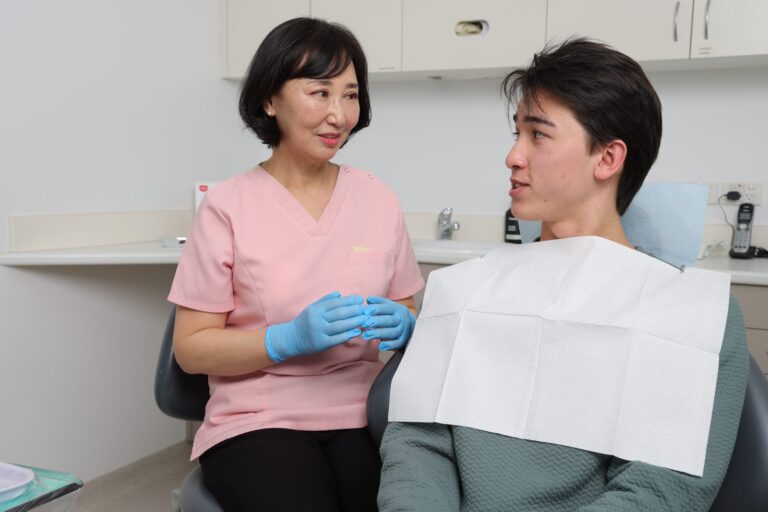
Dr Mee Kim is our principal dentist. Dr Mariana Habil also sees patients here. Suite 2, 330 High Street, Ashburton.
Book an appointment
Same-day and Saturday appointments available, with free on-site parking in Ashburton.
Book online (03) 9885 7588