
Root Canal Treatment in Ashburton
Root canal treatment has a worse reputation than it deserves. It relieves severe toothache and saves a tooth that would otherwise have to come out — and with modern anaesthetic, most people find it no worse than a filling.
Root canal treatment near you in Ashburton
If you searched for root canal treatment near me from Ashburton, Glen Iris, Ashwood, Malvern East, Burwood or Camberwell, we’re close by at Suite 2, 330 High Street, Ashburton, with free on-site parking. In pain? Call us and we’ll do our best to see you the same day.
Call (03) 9885 7588Book onlineGet directions
- Hours: Monday and Thursday 8:30 am – 8:00 pm, Tuesday and Wednesday 8:30 am – 7:30 pm, Friday 8:30 am – 6:30 pm, Saturday 8:30 am – 5:00 pm.
- Health funds: Bupa Members First Platinum, HCF and nib preferred provider. HICAPS claims on the spot.
When it’s needed
Inside every tooth is a chamber containing nerve and blood vessels. When deep decay, a crack or trauma lets bacteria reach that pulp, it becomes inflamed and then infected. That’s the pain that keeps you awake, throbs when you lie down, or lingers long after something hot or cold touches it.
Once the pulp is infected it won’t recover on its own, and antibiotics alone won’t fix it. The choice is treatment or extraction. Root canal treatment removes the infected tissue, disinfects and seals the canals, and lets you keep your own tooth.
Common questions
Does it hurt?
The infection causes the pain; the treatment relieves it. With proper anaesthetic, most patients report it feeling much like having a filling done.
How long does it take?
Typically 60–90 minutes per visit, depending on which tooth and how many canals it has.
Will the tooth darken?
Front teeth occasionally discolour after treatment. Internal whitening or a veneer can address that if it happens.
What’s the alternative?
Extraction. That’s cheaper upfront, but replacing the tooth later with an implant or bridge costs considerably more than saving it now.
What happens
- Diagnosis. Testing and X-rays confirm the pulp is involved and rule out other causes of pain.
- Numbing and access. The tooth is thoroughly anaesthetised, then a small opening is made in the crown to reach the canals.
- Cleaning and shaping. The infected tissue is removed and the canals are disinfected and shaped. This is the part that relieves the pain.
- Sealing. The canals are filled with a biocompatible material to prevent reinfection. Some cases need two visits with medication in between.
- Restoring the tooth. A treated back tooth becomes brittle and usually needs a crown to protect it from fracture. This step matters — teeth are far more often lost afterwards from cracking than from failed treatment.
Signs you may need root canal treatment
- Toothache that throbs on its own or wakes you at night.
- Sensitivity to hot or cold that lingers after the food or drink is gone.
- Pain when you bite or tap on the tooth.
- A small pimple-like bump on the gum near the tooth.
- A tooth that has turned darker after a knock.
Some infected teeth cause no pain and only show up on an X-ray at a routine check-up. Sensitivity on its own can have other causes. See common causes of sensitive teeth. If you feel anxious about treatment, see options for nervous patients.
After treatment
The tooth and gum may feel tender for a few days, especially when you bite. This usually eases steadily. Over-the-counter pain relief can help; ask your pharmacist what suits you. Avoid chewing hard food on that tooth until the final restoration is in place. Call us if the pain gets worse instead of better, if swelling appears, or if the temporary filling falls out.
How long a treated tooth can last
For many people, a root-filled tooth that is well restored can last for many years. A good seal, a strong final restoration and careful cleaning at home all help. A back tooth usually needs a crown, though sometimes an onlay is enough. Occasionally a treated tooth becomes infected again. It may be treated a second time, or removed if it cannot be saved.
When a referral may be needed
Some teeth have very curved, narrow or blocked canals, or have been treated before. In complex cases like these, your dentist may recommend a referral for further care and will explain why.
Health funds
We are a Bupa Members First Platinum, HCF More for Teeth and nib First Choice preferred provider. We accept all health funds, including Medibank, ahm, CBHS and Australian Unity, claimed on the spot with HICAPS.
More questions about root canal treatment
Can I go back to work after root canal treatment?
Many people go back to work or school the same day. Your mouth may stay numb for a few hours, so take care with hot drinks and avoid biting your cheek or lip.
Can a root-filled tooth still get decay?
Yes. The tooth no longer has a live nerve, so you may not feel decay starting. The tooth around the crown or filling can still decay, and the seal can leak over time. Brush twice a day, clean between your teeth and keep up regular check-ups so problems are found early.
What happens if I put it off?
An infected pulp does not heal on its own. Waiting can let the infection spread into the bone, cause swelling, or weaken the tooth until it can no longer be saved. Pain may come and go, which can make it seem settled when it is not. Book an assessment early if you notice symptoms.
At Aesthetic Mee
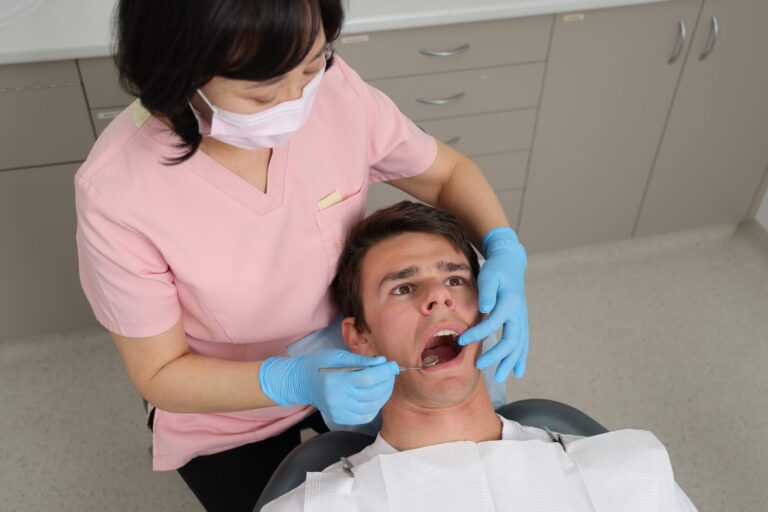
Root canal treatment is done here at the practice by Dr Mee Kim, including same-day pain relief when an inflamed nerve needs to be removed urgently.
In pain? Book an assessment
Same-day and Saturday appointments available, with free on-site parking in Ashburton.
Book online (03) 9885 7588