
TMJ & Jaw Pain Treatment in Ashburton
Jaw pain, clicking, headaches and difficulty opening often trace back to the temporomandibular joint. Most cases improve with conservative treatment.
Understanding TMD
The temporomandibular joint connects your jaw to your skull, and it works harder than almost any joint in the body. When it becomes irritated — often through clenching, grinding, injury or arthritis — the result can be pain in the jaw, ear or temple, clicking, locking, or headaches on waking.
The good news is that most temporomandibular disorders respond to conservative measures. Surgery is rarely the first answer, and we’d exhaust simpler options long before considering a referral.
What’s involved
Assessment
We examine joint movement, muscle tenderness and your bite, and take imaging if it’s warranted.
Splint therapy
A custom night splint reduces load on the joint and protects teeth from grinding damage.
Self-management
Soft diet during flare-ups, heat, gentle exercises and stress management genuinely help.
Bite adjustment
Where an uneven bite is a contributing factor, small adjustments can reduce strain.
When to see us about jaw pain
Book a check if you have jaw pain lasting more than a couple of weeks, clicking that comes with pain, a jaw that catches or locks, trouble opening wide, or headaches on waking.
If your jaw locks open or closed after an injury, call us straight away on (03) 9885 7588. Many jaw problems are linked to grinding and clenching, so we check for that too.
Common questions
Is jaw clicking a problem?
Clicking without pain is common and often needs no treatment. Clicking with pain or locking is worth checking.
How long does treatment take?
It varies. Many people improve over weeks to a few months with simple measures. We review progress with you along the way.
Do you work with physios?
Yes. Jaw physiotherapy can help, and we refer when it suits.
Will I need surgery?
Rarely. Simple options come first, and we refer to a specialist only if they don’t help.
Health funds: we’re a preferred provider for Bupa Members First Platinum, HCF More for Teeth and nib First Choice, and we claim on the spot through HICAPS for all other funds. Cover depends on your policy, waiting periods and limits. Call (03) 9885 7588 and we’ll check before you book.
What happens at a jaw assessment
- Your dentist asks when the pain started, what makes it worse, and whether you have had an injury, headaches or ear symptoms.
- We measure how wide you can open and watch how the jaw moves.
- We listen and feel for clicking, and press gently on the jaw, temple and neck muscles.
- We check your teeth for wear, cracks and decay, and look at how your bite meets.
- You get a plan in plain words, including what you can do at home.
Simple steps while you wait for your appointment
These do not replace an assessment, but they may ease a flare-up.
- Eat soft foods and cut food into small pieces.
- Avoid gum, chewy lollies, biting nails and chewing pens.
- Support your chin with your hand when you yawn.
- Hold a warm, damp cloth on the sore side for 10 to 15 minutes.
- Rest your jaw with lips together, teeth apart and tongue resting on the roof of your mouth.
- Ask your pharmacist or GP which pain relief suits you.
When the pain is not the jaw joint
Pain around the jaw can come from somewhere else. A cracked tooth, a tooth infection or a wisdom tooth can feel like jaw pain. Ear and sinus problems can too. That is why we check the teeth first. For sudden, severe pain, see our emergency dentist page.
Jaw pain with chest pain, shortness of breath or pain down the arm needs urgent medical help. Call 000. Swelling in the face with a fever also needs to be seen the same day.
If simple treatment is not enough
If your symptoms do not settle, your dentist may refer you to a physiotherapist, your GP, or a dental practitioner with further training in jaw disorders. If clenching or grinding is a big part of the problem, our teeth grinding treatment page explains the night splint in more detail.
More questions about TMJ and jaw pain
Should I see a dentist or a doctor for jaw pain?
Either is a reasonable starting point. A dentist can check your teeth, bite, jaw muscles and joint. A GP can check for ear, sinus and other medical causes. If one of us thinks the other should take a look, we will say so.
Can jaw pain come back after it settles?
It can. Flare-ups may follow stress, illness, a cold, or a long dental visit with your mouth open. Keep using your splint if you have one, go back to the simple steps early, and book a review if it does not settle within a couple of weeks.
Can I still have dental treatment if my jaw is sore?
Usually, yes. Tell us before we start. We can keep the visit shorter, give you breaks to close and rest, and support your jaw while you hold it open. Long, non-urgent treatment may be better left until a flare-up settles.
At Aesthetic Mee
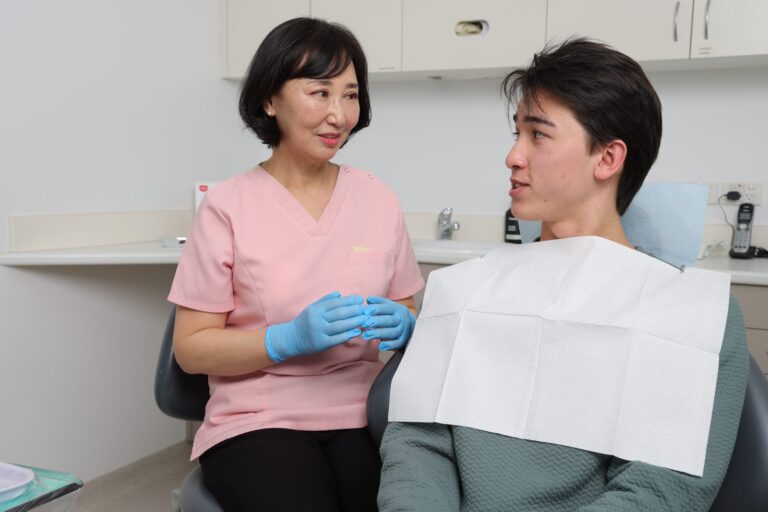
Night splints, often part of managing jaw pain from clenching, are made and fitted here by Dr Mee Kim.
Book an appointment
Same-day and Saturday appointments available, with free on-site parking in Ashburton.
Book online (03) 9885 7588