
Tooth Extractions in Ashburton
Removing a tooth is always the last option we consider — but when a tooth can’t be saved, doing it well and comfortably matters.
When extraction is the right call
We’ll always look at whether a tooth can be restored first: a filling, root canal treatment, or a crown. Extraction becomes the sensible choice when decay or fracture goes too deep, when severe gum disease has destroyed the supporting bone, or when a tooth is causing crowding or repeated infection.
If a tooth does come out, we’ll talk about replacement at the same time — a gap left long-term causes drifting, over-eruption and bone loss.
What’s involved
Comfort
Local anaesthetic means you should feel pressure but not pain. Tell us if you feel anything sharp and we’ll add more.
Aftercare
Bite on gauze, avoid rinsing or smoking for 24 hours, and stick to soft food. We give written instructions and a contact number.
Dry socket
Uncommon but painful, and more likely in smokers. Call us if pain worsens after day two rather than improving.
Replacing the tooth
Implant, bridge or denture — we’ll discuss the options and costs so you can plan ahead.
Before and after an extraction
Before: tell us about any medications, particularly blood thinners, and any heart or bone conditions — some need a plan agreed with your GP first. Eat normally beforehand unless you’re having sedation. After: bite firmly on the gauze for 30–45 minutes, take pain relief before the numbness fades, and keep to soft food and the other side of your mouth for the day. Avoid rinsing, spitting, smoking and straws for 24 hours so the protective clot stays put. Mild swelling and discomfort for a few days is expected; pain that gets worse after day two is not, and warrants a call.
If a tooth is coming out, replacement is worth deciding early. A gap left long-term lets neighbouring teeth drift and the opposing tooth over-erupt, which complicates later treatment — an implant, bridge or partial denture is easier to plan while the space is still tidy.
Extractions — common questions
Will it hurt?
You’ll feel pressure, not pain. If anything feels sharp, tell us and we’ll add more anaesthetic before continuing.
What’s the difference between simple and surgical?
Simple: the tooth is intact and can be loosened and lifted out. Surgical: the tooth is broken, impacted or curved, so gum and sometimes bone are opened to reach it.
Can I drive home?
After local anaesthetic alone, yes.
Do you offer sedation?
Yes, sedation is available on request. Ask us when you book.
Signs a tooth may need to come out
- Decay or a fracture that runs below the gum line.
- A tooth that is very loose because of advanced gum disease.
- Repeated infection in a tooth that has already been treated.
- Crowding, where your dentist plans space for braces or other orthodontic treatment.
Pain alone does not mean a tooth must come out. Root canal treatment may save it. For wisdom teeth, see wisdom teeth removal.
What happens on the day
- Your dentist reviews your medical history and X-ray, and explains the plan and any risks.
- Local anaesthetic is given, with time allowed for it to work.
- The tooth is gently loosened and lifted out. You may hear some noises and feel firm pressure.
- Gauze is placed over the socket. Sometimes a few stitches are used.
- You go home with written aftercare and our phone number.
A simple extraction is often done well within an hour, including the time to numb the area.
The first few days
Good soft food choices include yoghurt, lukewarm soup, scrambled eggs and mashed potato. From the next day, rinse gently with warm salt water after meals. Brush your other teeth as usual and take care near the socket. Avoid heavy exercise for a day or two, as it can restart bleeding. If stitches were placed, they either dissolve or are removed at a short follow-up.
Children and baby teeth
A baby tooth may need removing because of deep decay, infection, or because it is blocking an adult tooth. See children’s dentistry. The Child Dental Benefits Schedule is accepted for eligible children aged 0–17, with no out-of-pocket for eligible children under the CDBS.
Health funds
We are a Bupa Members First Platinum, HCF More for Teeth and nib First Choice preferred provider. We accept all health funds, including Medibank, ahm, CBHS and Australian Unity, claimed on the spot with HICAPS.
In pain now? See emergency dental care or call (03) 9885 7588.
More questions about extractions
How long does the socket take to heal?
The gum usually closes over within a couple of weeks. The bone underneath takes longer, often a few months, to fill in. Many people can eat normally once the tenderness settles, usually within a week. Your dentist will advise on timing if you plan to replace the tooth.
Can I have a tooth out on the day I call?
Same-day appointments are often available, especially if you are in pain. Your dentist will check the tooth and take an X-ray first. Sometimes it is safer to settle an infection or check a medical condition with your GP before removal, so the extraction may be booked for another day.
Will I need time off work?
Many people return to work the next day after a simple extraction. If the extraction was surgical, or your job is physical, you may want a day or two off. Rest on the first evening and avoid heavy lifting for a day or two to lower the risk of bleeding.
At Aesthetic Mee
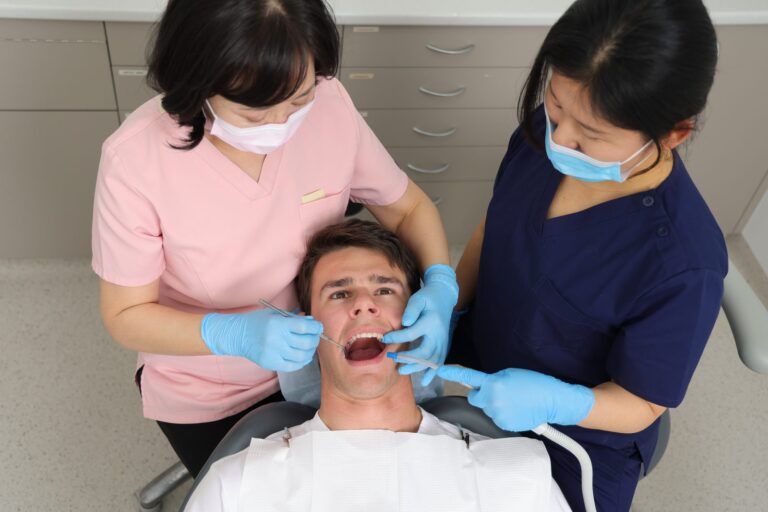
Simple extractions here are mostly done by Dr Mee Kim. Surgical extractions, where gum or bone has to be opened, are mostly done by Dr Mariana Habil: 25 of the 41 surgical extractions at the practice since January 2026.
Book an appointment
Same-day and Saturday appointments available, with free on-site parking in Ashburton.
Book online (03) 9885 7588